ChatGPT Connectors
Apps in ChatGPT, formerly Connectors. Giving ChatGPT a secure way into the tools teams already live in, like Drive, GitHub, and SharePoint, without asking them to give up control.
TL;DR
ChatGPT only knew what you typed into it, so enterprise work stayed out of reach. I co-led the design of Connectors, the framework that lets ChatGPT securely read from tools like Drive, GitHub, and SharePoint, with human approval before any action and citations back to the source. It shipped as the foundation of what is now Apps in ChatGPT.
Context
ChatGPT was great at answering questions, but it lived in a bubble. It only knew what you typed into it. For companies, that was the dealbreaker. The work that actually mattered sat in their files, their repos, and their internal tools, and ChatGPT couldn't see any of it. People were pasting whole documents into the chat just to get a useful answer, which kind of defeated the point.
The hard part was never the "connect" button. It was trust. The moment a model starts reading someone's private documents, the questions get personal. What is it looking at? Can I stop it? Where did that answer actually come from? Get those wrong, and no security team would ever turn it on.
My role
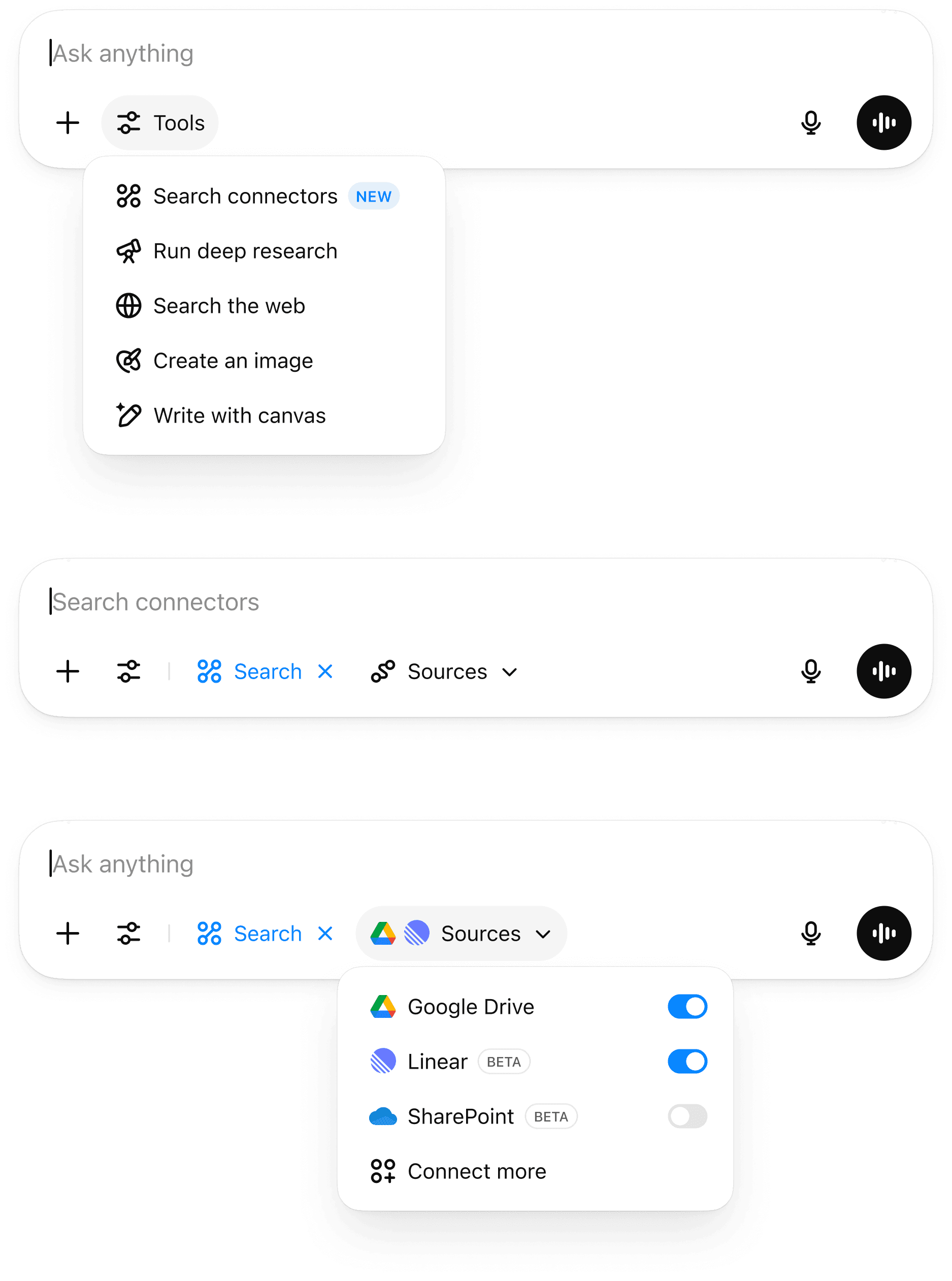
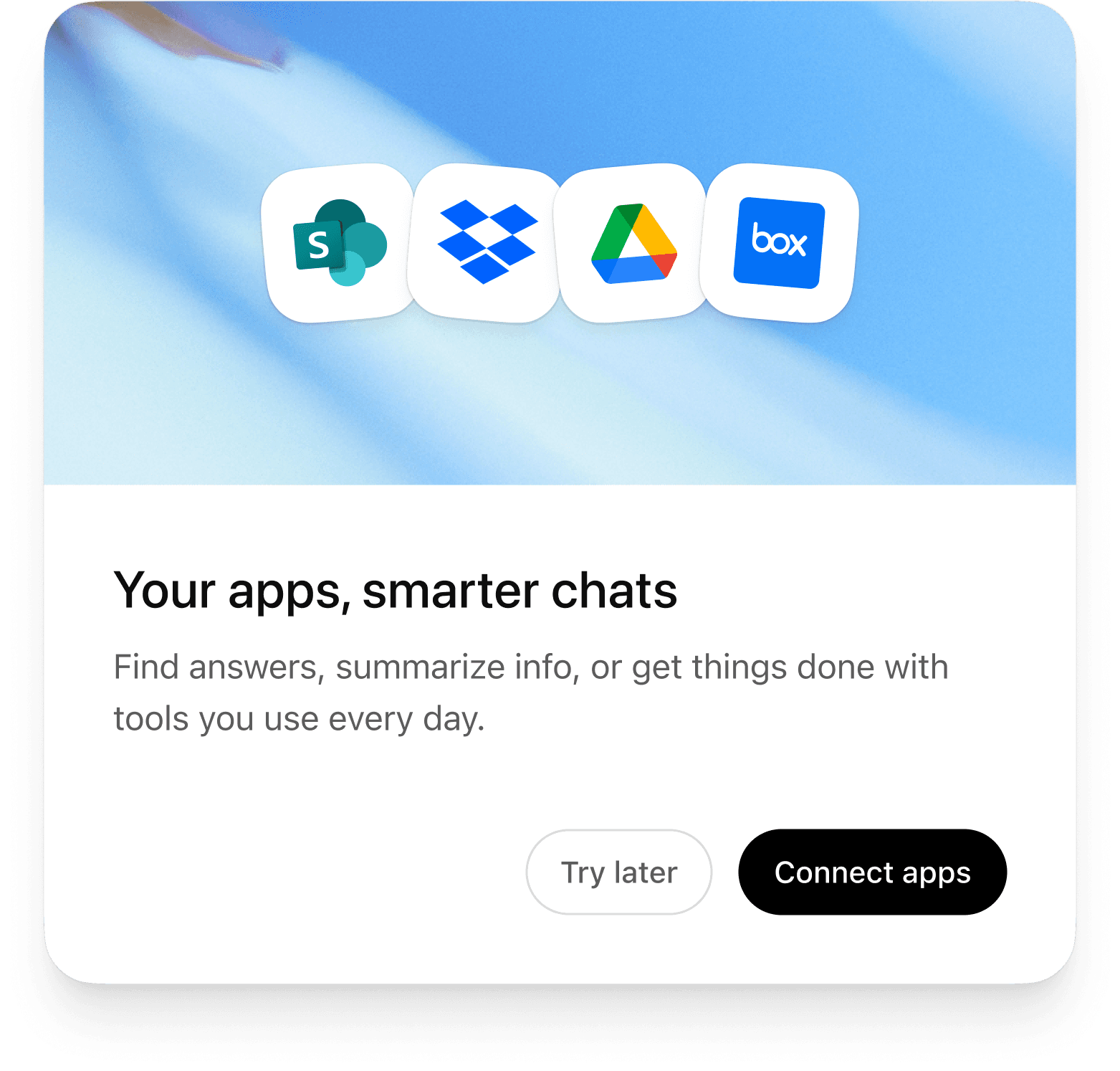
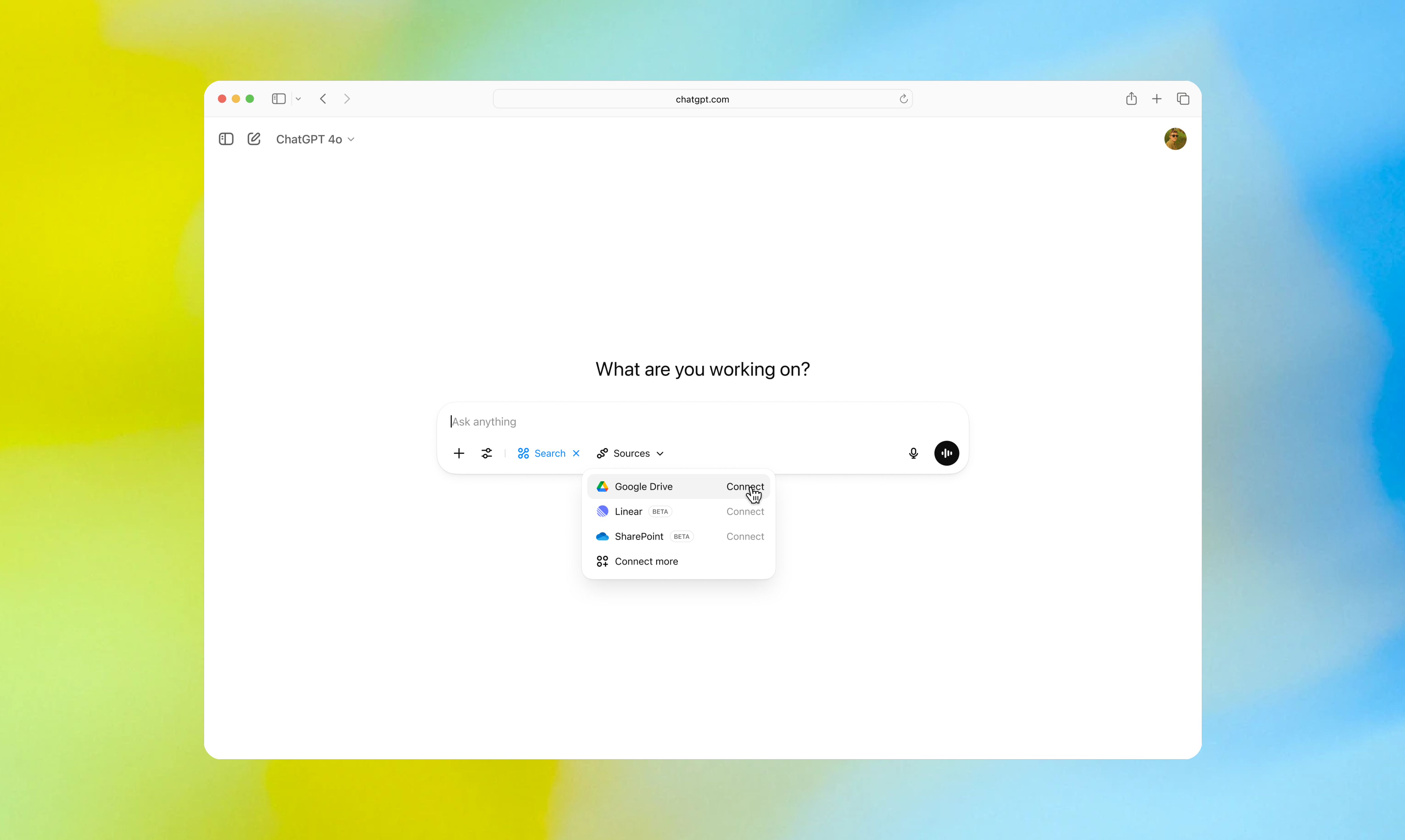
I owned the moments people never notice. How ChatGPT asks to connect an account and what it promises in return. How it shows what it is about to open before it opens it. How it pauses for your approval instead of running ahead on its own. I designed the waiting states so a search reads as working rather than frozen, and pushed hard on citations so every answer pointed back to the exact file it came from.
Key decisions
The approval moment. The core tension was model autonomy versus user control. Full autonomy was faster but no security team would approve it. Approval on every step was safe but unusable. We landed on approval gates only at write-actions and first-time access, so the model moves freely on reads and pauses where the stakes are real.
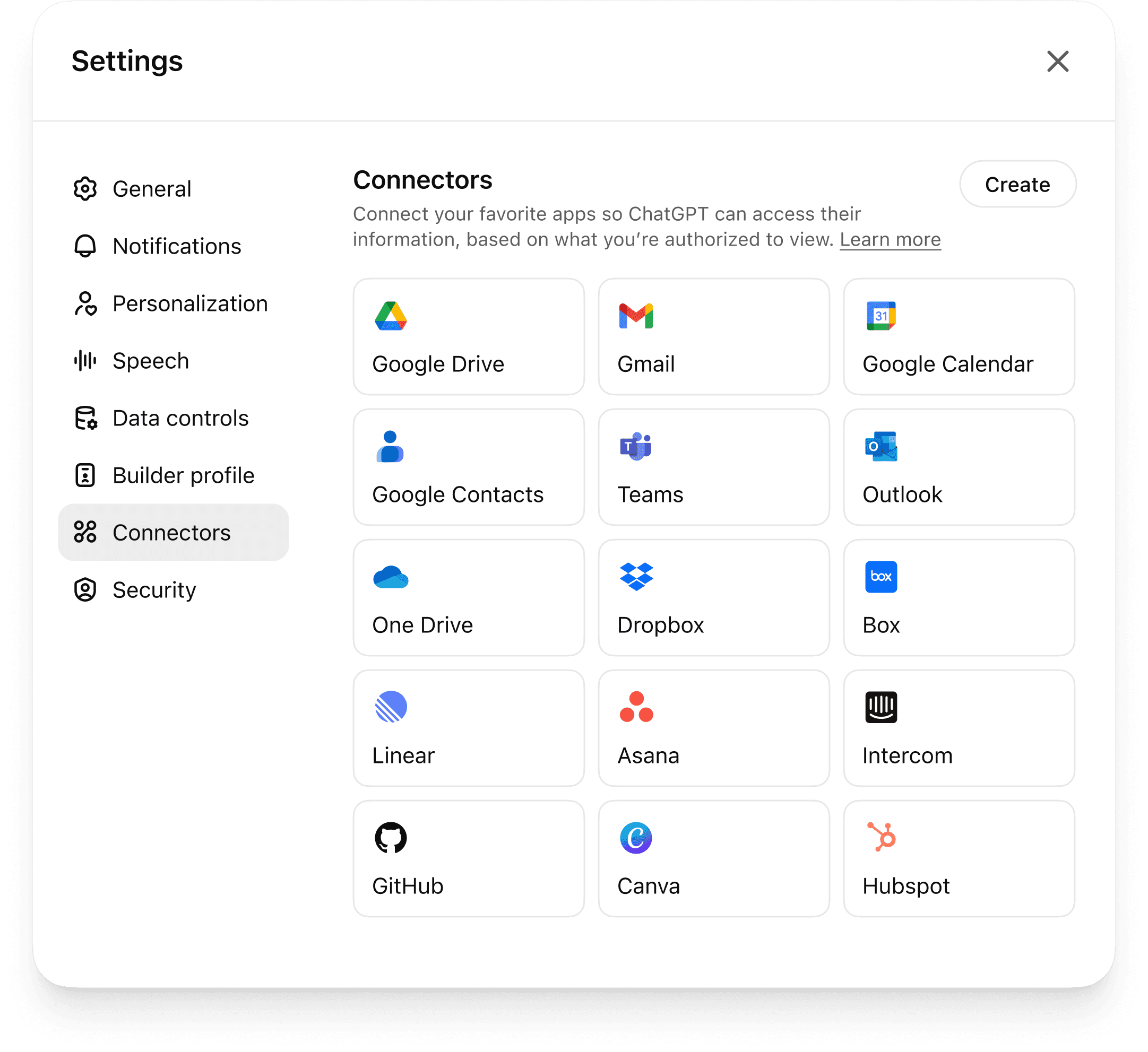
One pattern, many tools. Drive, GitHub, and SharePoint behave completely differently under the hood, but connecting your tenth app had to feel as obvious as your first. The work was finding the shared language of connect, permission, and source that held up across all of them.
Trust through citations. People will not act on an answer they cannot verify. Every response points back to the exact source file, so users check the source instead of taking the model's word for it.
Outcome
Connectors shipped to enterprise customers with Drive, GitHub, and SharePoint at launch, and the pattern now supports the full catalog of apps in ChatGPT today. The permission and citation model we designed became the trust layer that made ChatGPT viable inside companies that had previously blocked it.